Shared indigenous experiences punctuate conference in NZ
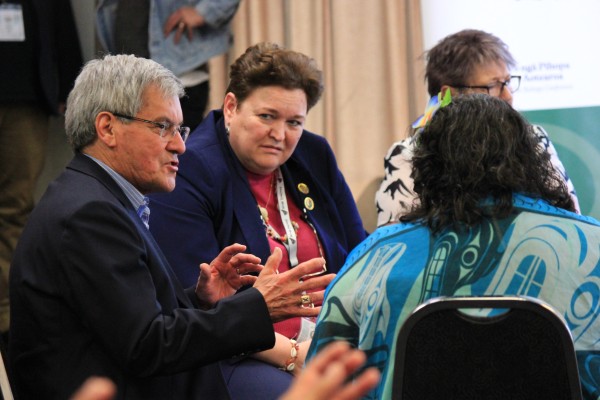
Participants in the second International Conference on Catholic Indigenous have been struck by the similar experiences and a common resilience across the four participating nations.
The conference, which will conclude in Auckland on Friday, has seen delegations from the United States, Canada and Australia join a New Zealand contingent.
Each country has led one day of the proceedings, outlining significant suffering and traumatic practices and policies, but also sharing stories of resilience, faith and hope.
Graydon Nicholas, a member of the Tobique First Nation in Canada, was at the first gathering in Washington, DC in 2023. He said this second gathering has taken the important conversations to another level.
“This is another stage in the journey that we as indigenous Catholics are on to become more fully involved with our Catholic faith,” he said, something he has called a “spiritual quest”.
“Even though we’re all indigenous people from different parts of the world, there are a lot of common experiences, but there is also a lot of common good that is present.”
Mr Nicholas said among his highlights of the Auckland conference have been the Masses that are incorporating components of indigenous culture and spirituality.
Manuel Beazley, who chairs Te Rōpū Māori, an advisory group to the New Zealand Catholic Bishops Conference, said he also was struck by the similarities of the experiences of people across the different countries.
Mr Beazley said one of the lessons he will take from the conference is the importance of a consistent approach to supporting indigenous Catholics. He believes that could be improved across Aotearoa New Zealand.
Doreen Flanders, who serves as deputy chair of the National Aboriginal and Torres Strait Islander Catholic Council in Australia, spoke of the pōwhiri at Tūtahi Tonu marae on Monday as a high point during the week.
“The welcome to country was absolutely amazing,” Aunty Doreen said. “To be welcomed in the traditional way – I was looking forward to that, because it is such an important part of Aboriginal and Torres Strait Islander culture.”
She conceded that the stories of cultures lost, of people dispossessed and displaced, made for difficult listening, but stories of faith also shone through.
“It’s so easy to make the connections about some of the social injustice that has happened to indigenous people,” she said.
“The thing that’s pricked my ears up, and I have thoroughly enjoyed, is how those communities and individual people, how they have incorporated and embraced Catholic identity, Catholic faith to themselves and their communities.”
Bishop John Folda of Fargo, in the US state of North Dakota, said identity – both as indigenous and as Catholics – has been a strong thread through the conference.
“All are seeking recognition as not only part of society but also as integral members of the Church,” he said.
“I think we’re all looking in common for ways to serve our indigenous brothers and sisters and to support them in their lives – in the living out of their culture and the living out of their Catholic faith.”
While acknowledging the smaller populations of New Zealand and Australia, Bishop Folda said he was struck by how closely connected Māori and Aboriginal Catholic advisory bodies are with their bishops’ conferences.